
forklift bin
A forklift bin is a specialized container engineered to integrate seamlessly with forklifts, serving as a cornerstone of efficient material handling across diverse industries. More than a mere storage box, it is designed to withstand heavy loads, ensure safe transport, and optimize space, making it indispensable in warehouses, manufacturing plants, construction sites, and agricultural operations. At its core, the forklift bin’s design prioritizes functionality. Most models feature reinforced edges and corners to resist impact from forklift tines or stacking. Strategic fork pockets—rectangular cutouts or channels—allow operators to slide tines securely into the bin, ensuring stable lifting and movement. Sizes vary widely: compact bins (2–3 feet long) hold small parts or tools, while industrial-grade bins (over 6 feet long) accommodate bulk materials like gravel, metal scraps, or packaged goods. Material selection depends on intended use. Steel bins are heavy-duty workhorses, capable of handling thousands of pounds and resisting wear from sharp or abrasive items. Galvanized steel variants prevent rust, making them ideal for outdoor use. Plastic bins, by contrast, are lightweight, corrosion-resistant, and easy to clean—perfect for food and beverage industries where hygiene is critical, or for transporting fragile items that require a non-abrasive surface. Some bins combine materials (e.g., steel frames with plastic liners) to balance strength and versatility. Several types of forklift bins cater to specific tasks. Open-top bins enable quick loading/unloading of loose items like construction debris or produce. Closed bins with lids protect sensitive goods (electronics, pharmaceuticals) from dust, moisture, or theft. Stackable bins feature interlocking edges to pile high without slipping, maximizing vertical storage. Nesting bins collapse or fit inside each other when empty, reducing storage footprint. Specialty bins—liquid-tight containers for chemicals, padded bins for delicate components—address niche needs. The benefits are manifold: they reduce manual labor, cutting injury risks and saving time. Standardized designs ensure compatibility with most forklifts, streamlining operations. By containing items, they minimize clutter and enhance workplace safety. For businesses, this translates to higher productivity and lower operational costs. Maintenance is key to longevity. Steel bins need regular rust/dent checks; repairs should be prompt to avoid structural failure. Plastic bins require inspections for cracks or warping (especially after extreme temperatures). Both types should be cleaned—steel with rust-resistant paint and wire brushes, plastic with mild soap. Ensuring fork pockets are debris-free before use prevents accidents. In essence, the forklift bin is a quiet hero of modern logistics, enabling smooth goods flow from production to distribution. Its adaptability and efficiency make it essential for any operation relying on quick, safe material movement.
Products
Category:
-
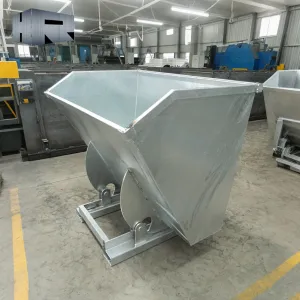
Hot-dip galvanized tipping bin for forklift Wholesale
Category: Self Dumping Hoppers/Tipping BinsBrowse number: 8307Number:Release time: 2023-09-21 22:12:39The Hot-Dip Galvanized Tipping Bin for Forklift is a heavy-duty self-dumping container designed for efficient handling, transport, and disposal of industrial waste and bulk materials. Built for durability and corrosion resistance, this tipping bin is fully hot-dip galvanized, making it ideal for outdoor use, harsh environments, and long-term industrial operations. Compatible with standard forklifts, the bin allows safe, quick, and controlled dumping, improving productivity and reducing manual labor.
News
Category:
-
[Industry News]What size skip bin do i need for my home renovation project?...
2023-10-30 16:40:49 -
[Industry News]How do house containers compare to traditional homes?
2024-10-29 02:09:18 -
[Industry News]What are the key performance advantages of hook lift bins?
2026-02-25 10:28:16 -
[Industry News]What materials and manufacturing processes are used for spec...
2026-03-18 08:36:47
Case
Category:
No search results found!
Video
Category:

Download
Category:
No search results found!
Job
Category:
No search results found!
Featured Products
No search results found!



 Phone
Phone