Side-opening containers represent a specialized evolution of conventional freight and storage units, engineered to address logistical and operational needs that cannot be met by end-only or top-access configurations. By integrating one or more large access openings along the lengthwise sides of the structure, these containers dramatically improve accessibility, handling efficiency, and versatility across a wide range of industries. Their performance characteristics stem from a combination of structural design, material selection, opening mechanism, sealing technology, and integration with handling equipment. Understanding these attributes clarifies why side-opening containers are favored for tasks that demand rapid loading and unloading, precise positioning of goods, or operation in spatially constrained environments.
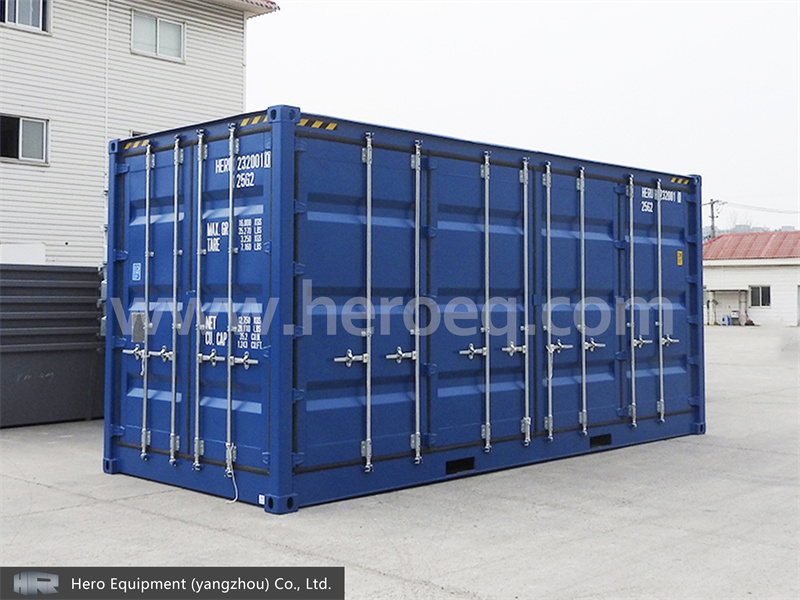
Enhanced Accessibility and Loading Flexibility
One of the foremost performance characteristics of side-opening containers is their superior accessibility. Traditional containers typically allow entry only through rear or top openings, which can necessitate moving goods longitudinally to reach those positioned at the front of the load bed. Side openings eliminate this inefficiency by granting immediate lateral access to the entire length of the interior space. Forklifts, pallet jacks, or roller conveyors can drive directly into the container through the open side, enabling straightforward placement or retrieval of pallets, crates, machinery, or irregularly shaped items without repetitive repositioning.
This lateral access is particularly advantageous when handling long or bulky items that would be cumbersome to maneuver through a single end doorway. It also facilitates staged loading or unloading, where goods can be placed in sequence corresponding to their delivery order, reducing double-handling and the risk of damage. In warehousing and distribution centers where throughput speed is critical, side openings significantly cut turnaround times.
Optimized Space Utilization in Confined Areas
Side-opening containers exhibit strong adaptability to tight operational quarters. In urban deliveries, narrow loading docks, or congested job sites, backing a trailer to an exact position can be challenging. With side access, the container can be parked parallel to a loading area, and goods transferred laterally, avoiding the need for extensive clearance behind or above the unit. This spatial efficiency also benefits indoor operations, such as placing containers within a manufacturing facility or event venue, where overhead clearance or rear approach may be limited.
Moreover, side openings can be configured at multiple heights and positions along the sidewalls, allowing operators to align the access plane with existing conveyor heights, platform levels, or staging zones. Such alignment minimizes the need for additional ramps or lifting equipment, streamlining workflows and reducing manual handling effort.
Structural Integrity and Load Distribution
While introducing large side openings might seem to compromise rigidity, modern side-opening containers are engineered to preserve structural integrity. The main framework typically employs reinforced longitudinal beams and cross members that maintain torsional stiffness and resistance to racking forces during transport. Side doors are supported by robust hinges and locking mechanisms anchored to these load-bearing elements, ensuring that the container retains its strength even when fully opened.
Load distribution characteristics are carefully considered: flooring systems are designed to bear point or distributed loads from palletized goods and handling equipment, while the side structure resists deformation from lateral forces exerted during opening, closing, or cargo shifting. Reinforcements such as thicker gauge panels, internal bracing, or perimeter tubing counteract potential weaknesses introduced by cutouts for doors. This balance enables the container to perform reliably under road transport loads, stacking in storage yards, and dynamic forces encountered during forklift entry.
Versatile Door Arrangements and Configurations
Side-opening containers offer diverse layout options to suit different operational requirements. Full-side openings span the entire length of one or both sidewalls, maximizing openness for unimpeded access. Partial-side openings, covering only a section of the sidewall, provide a compromise between accessibility and structural retention, useful when only occasional side entry is needed. Multiple door panels can be arranged in segments that fold, slide, or lift aside, allowing flexible opening sizes according to cargo dimensions.
Some designs incorporate vertical lift-up side doors, which rise to the top edge, creating a wide aperture without encroaching into ground space. Others feature horizontally sliding panels that retract into pockets within the side structure. The choice of configuration affects not only access patterns but also aerodynamic profile when in transit and interaction with site infrastructure.
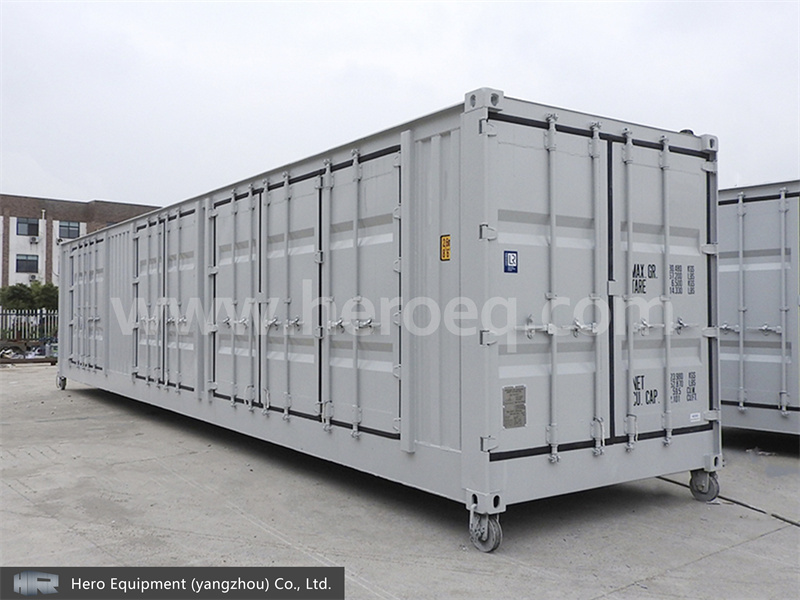
Secure Sealing and Weather Protection
A key performance characteristic is the ability to maintain weather resistance and security when closed. Side doors are fitted with high-quality gaskets—often made from durable elastomers such as EPDM or neoprene—that form a continuous barrier against rain, dust, and wind-driven moisture. Multi-point locking systems engage rods and camlocks that draw the door tightly against the frame, compressing the gasket uniformly to prevent leakage.
Hinge systems are designed to accommodate dynamic loads and prevent door sagging over time, preserving seal integrity throughout the container’s service life. Corrosion-resistant materials and protective coatings on hinges, locks, and frames ensure reliable operation in harsh climates. These sealing features make side-opening containers suitable for transporting sensitive goods, electronics, or materials that must remain dry and clean, despite repeated opening and closing cycles.
Compatibility with Handling Equipment and Automation
Side-opening containers are highly compatible with a variety of material handling systems. Their design readily accommodates forklifts driving in at floor level, roller beds aligned with the doorway, or automated guided vehicles entering to deposit or collect items. In facilities equipped with conveyor lines, side openings can be flush-mounted with conveyor portals, supporting seamless integration into production or distribution flows.
This compatibility extends to intermodal transport scenarios, where containers must transition between ship, rail, and truck without changing their basic access method. Standardized corner castings and twist lock provisions ensure that side-opening containers can be handled by the same fleet of cranes and transporters as conventional units, preserving logistical flexibility.
Operational Efficiency and Workflow Improvement
From a performance standpoint, side openings contribute directly to faster and safer operational workflows. Reduced handling distances and elimination of longitudinal shuffling lower the incidence of product damage and worker strain. In time-sensitive logistics, such as just-in-time manufacturing supply or perishable goods delivery, the swift ingress and egress enabled by side openings help maintain schedule adherence.
Additionally, the visibility afforded by side openings allows operators to assess and organize cargo positioning more effectively, improving space utilization within the container and reducing wasted voids. This advantage is valuable in less-than-truckload shipments where mixed cargo types are consolidated.
Adaptability to Specialized Applications
Side-opening containers demonstrate strong adaptability to specialized uses beyond standard freight. In construction, they serve as mobile workshops or equipment rooms, where tools and machinery must be accessed quickly on site. In emergency response, they can function as rapidly deployable command posts or medical supply depots, with side entries facilitating fast stocking and retrieval. Event management utilizes them for backstage storage, where frequent loading of props and dismantling of setups is required.
Their customizable interior layouts—including shelving, racking, lighting, and power integration—further enhance suitability for niche roles. The side access simplifies installation and maintenance of such internal systems, as technicians can work from outside the container without needing to crawl through end doors.
Durability Under Frequent Access Cycles
Because side-opening containers often experience more frequent opening and closing than standard containers, durability of moving parts is a critical performance trait. Hinges are manufactured from high-strength alloys and may include grease fittings for lubrication. Locking mechanisms are designed for thousands of cycles without failure, using hardened steel components and anti-vibration fasteners. Wear-resistant guides and rollers support sliding door variants, minimizing friction and prolonging service life.
Regular maintenance protocols focus on inspecting seals for compression loss, hinges for alignment, and locks for smooth engagement. High-quality construction and preventive care ensure that performance characteristics related to access and security persist throughout the container’s lifespan.
The performance characteristics of side-opening containers—enhanced lateral accessibility, optimized space usage in confined areas, preserved structural integrity, versatile door arrangements, secure sealing, compatibility with handling equipment, workflow efficiency, adaptability to specialized roles, and durability under frequent use—combine to make them a powerful solution for modern logistics and operational needs. By removing traditional bottlenecks associated with end-only access, they enable faster, safer, and more ergonomic handling of goods, while maintaining the robustness required for intermodal transport and harsh environments. As industries continue to seek ways to streamline supply chains and respond nimbly to dynamic demands, the distinctive performance traits of side-opening containers will keep them at the forefront of flexible, efficient cargo management.



 Phone
Phone
Comment
(0)